
Tile adhesive and cement mortar can both contain cement. The main difference is the formulation, the installation method and the applications for which the system is specified.
What is the difference?
Traditional mortar is mixed from cement, sand and water. Tile adhesive is a prepared formulation designed for specified bonding applications. Cement-based adhesives may include graded fillers and additives that affect handling and performance; the exact properties depend on the product.
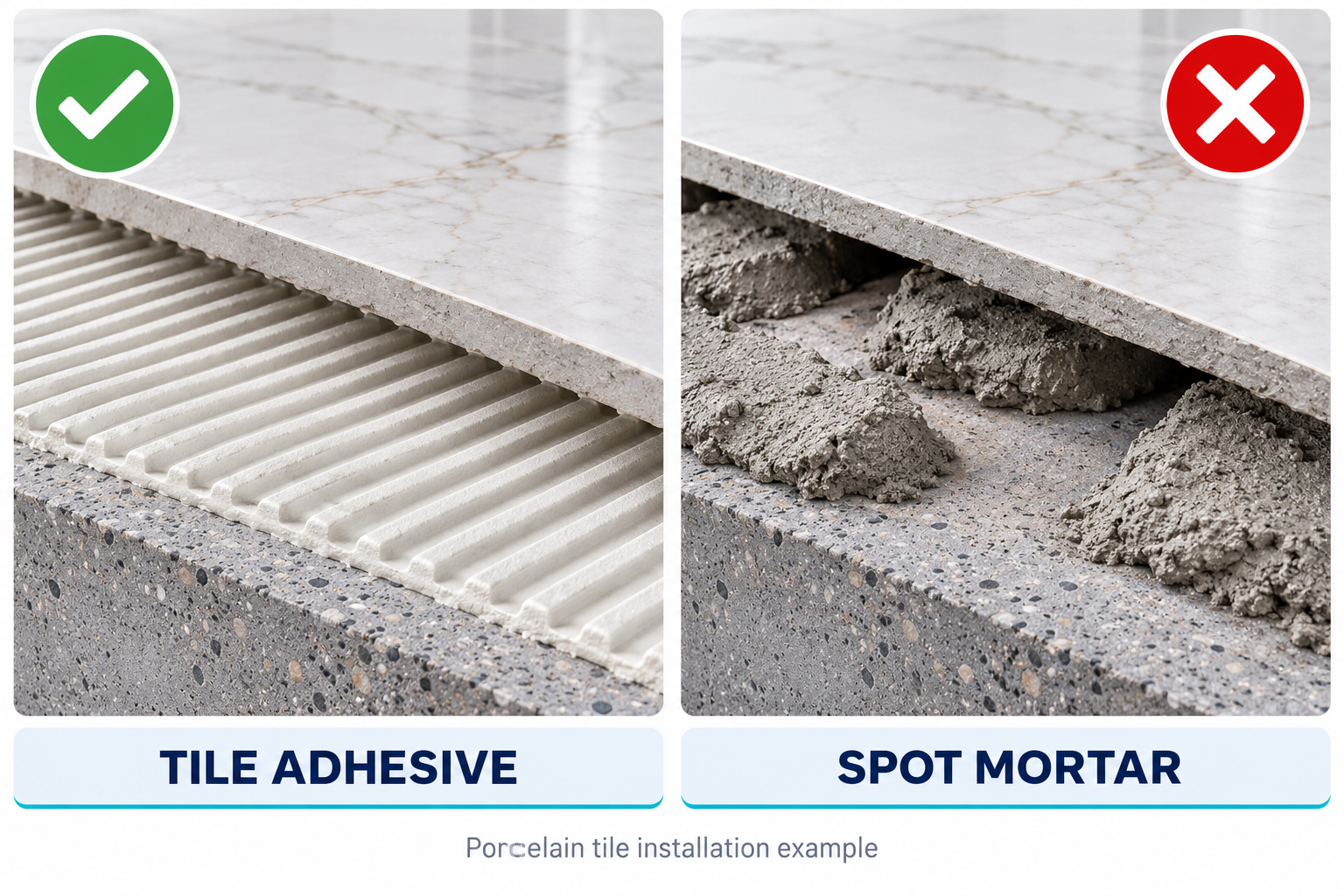
Compare the approach
Porcelain tile installation example✓ Use a suitable adhesive and the specified bedding method. ✕ Isolated mortar blobs leave unsupported voids. This is an illustration: adhesive ridges must be compressed during placement and contact checked. This comparison does not mean every mortar system is unsuitable.
| Consideration | Tile adhesive | Cement mortar |
|---|---|---|
| Composition | A factory-prepared mix, commonly cement-based with additives depending on the formulation. | A traditional mixture of cement, sand and water; properties depend on the mix and workmanship. |
| Application | Usually applied as a thin bed within the product’s specified thickness and trowel requirements. | Used in traditional installation methods, often in a thicker bed depending on the system. |
| Tile selection | Select a grade approved for the tile type, size, substrate and service conditions. | Do not assume suitability for every tile, especially low-absorption porcelain. |
| Mixing and control | Follow the stated water ratio, mixing instructions and working times. | Sand quality, mix proportions and installation practice influence the result. |
Choose for the installation
Begin with the tile manufacturer’s recommendations and the project specification. Consider the substrate, tile dimensions, indoor or outdoor exposure and wet-area requirements. A product suitable for one installation is not automatically suitable for another.
Before starting, check the selected adhesive’s technical data sheet for surface preparation, water ratio, bed thickness, open time, curing and any limitations. Adhesive should not be used to level a surface unless the manufacturer explicitly permits it.
Choosing adhesive for ceramic and porcelain tiles
Tile type matters when comparing tile adhesive with cement mortar. Ceramic and porcelain should not be treated as interchangeable. Porcelain has low water absorption, so the fixing system must be specifically suitable for it. Check the tile size, thickness and intended use alongside the adhesive specification. A familiar product name or colour alone does not establish suitability.
Large-format tiles, natural stone and installations exposed to movement may have additional requirements. Confirm whether the selected system calls for a particular adhesive class, substrate treatment or application method. Ask for technical advice when the tile or surface falls outside the product’s stated uses.
Surface preparation before tile installation
A suitable adhesive still needs a suitable base. Inspect the surface for dust, grease, loose material, weak coatings and uneven areas before mixing. The substrate must be sound and prepared as required by the selected installation system. Installing over an unsuitable surface can compromise the bond even when the adhesive is appropriate for the tile.
Existing tiles, painted walls and absorbent backgrounds need individual assessment. Some systems require cleaning, mechanical preparation or a compatible primer. Correct significant unevenness with an approved preparation product rather than exceeding the adhesive’s permitted thickness. Follow the specified curing requirements for new backgrounds.
Mixing water, working time and open time
For a cement-based adhesive, measure clean water according to that product’s data sheet and mix using the recommended equipment and sequence. Do not use one water ratio for every brand or bag size. Extra water or unapproved additions can change the mix from the formulation that the manufacturer has specified.
Working time describes how long the mixed material remains usable; open time relates to the interval after spreading during which tiles can be placed effectively. These are different limits. High temperatures, wind and absorbent surfaces can shorten the available installation window. Spread only an area that can be tiled within the actual site conditions, and do not revive ageing material by adding more water.
Adhesive coverage and application thickness
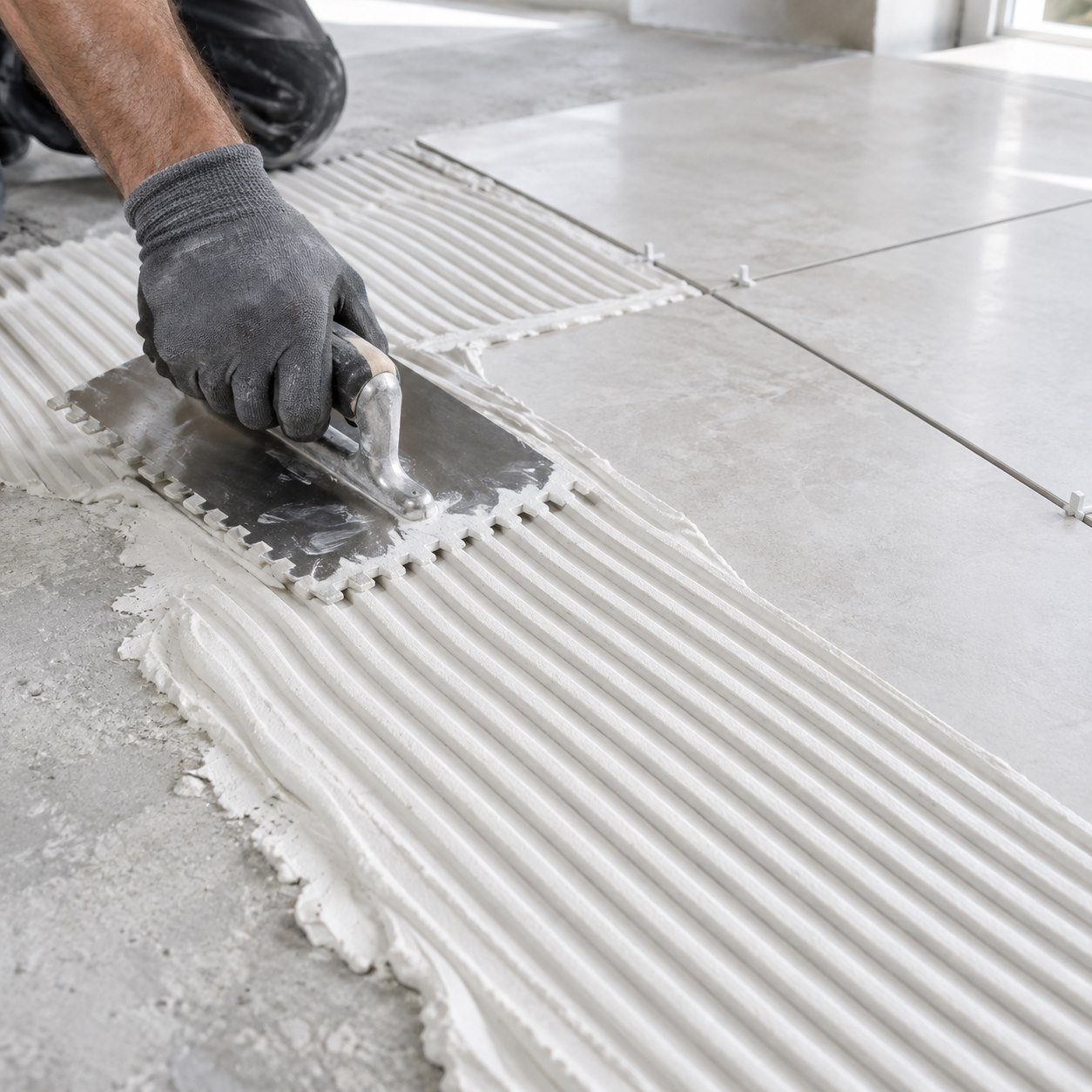
Choose the trowel and application thickness specified for the tile and product. Comb the adhesive consistently and check contact beneath a freshly placed tile during installation. A visible bed of ridges is not, by itself, proof that the finished tile has adequate support. Larger tiles and demanding applications may require adhesive on the tile back as part of the approved method.
Bathrooms, outdoor areas and hot-weather work
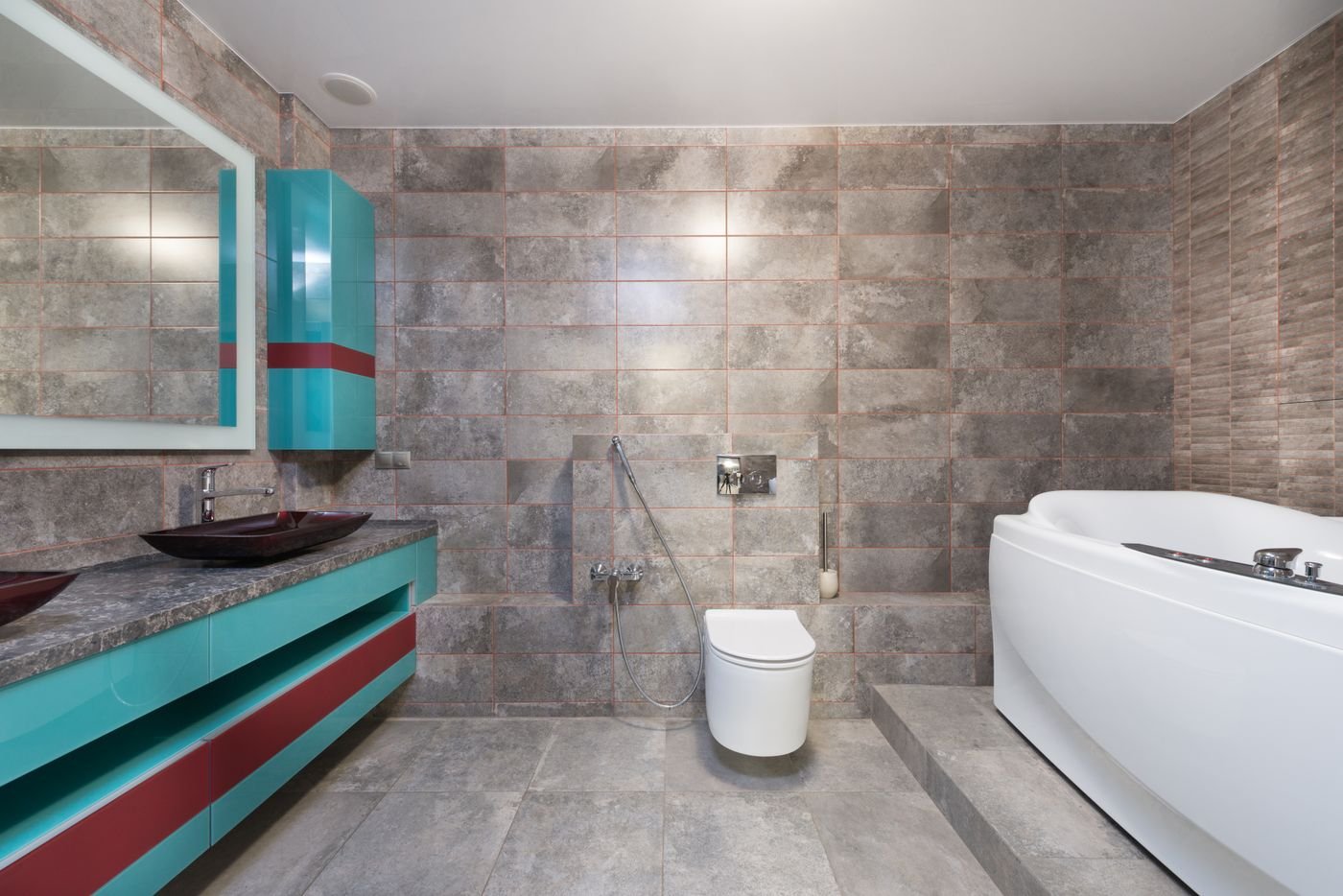
A bathroom, an external terrace and an internal dry floor do not necessarily use the same system. Wet areas may require a separate waterproofing layer and compatible detailing; tile adhesive should not be assumed to replace waterproofing. Outdoor installations also need consideration of exposure, drainage and movement requirements.
For projects in Saudi Arabia, check the permitted application-temperature range and the condition of the actual substrate. A hot surface can behave differently from the reported air temperature. Plan the work around the manufacturer’s limits and protect materials as directed. Never transfer working-time figures from a different product to the adhesive being used.
Common questions about tile adhesive and mortar
Is tile adhesive always better than cement mortar? The correct choice is the system specified for the tile, substrate and project. An adhesive chosen without checking its limitations is not automatically a better solution. Traditional mortar methods also require the right materials, detailing and workmanship.
Can tile adhesive be used to level an uneven floor? Only within the selected product’s stated uses and thickness limits. Where preparation is needed, choose a compatible repair or levelling system before fixing the tiles. Can grout be applied immediately? Follow the adhesive’s stated waiting period and the grout instructions; temperature, tile type and site conditions can affect progress.
General references: Weber: material composition · Weber: installation selection · Example product data
Further references: Surface preparation · Mixing and working limits · Application conditions · Installation questions